
.svg)
Guide Highlights
Checking out insulin pump options? Our simple guide breaks down your options, costs, and what to expect so you can find the right fit for your life. Start your journey with confidence.
This guide is for information purposes only, and we encourage you to follow advice from your healthcare professional before making any decisions about your health.
An insulin pump is a device for people living with diabetes that eliminates the need to inject insulin by hand using a needle.
Insulin pumps are about the size of a deck of cards, attach to your body via tube or pod, and deliver insulin under the surface of the skin (subcutaneously). Insulin pumps help to relieve the burden of diabetes management by replacing the need to give many injections throughout the day.
There are five commercially-available insulin pumps available on the market in Canada:
- Medtronic 780G
- Omnipod DASH
- Omnipod 5
- Tandem t:slim X2 with Control IQ
- Ypsomed mylife Loop with CamAPS FX
All insulin pumps listed above, with the exception of the Omnipod Dash, are Automated Insulin Delivery Systems. In Canada, automated insulin delivery (AID) refers to a system that uses a combination of devices and algorithms to automatically adjust insulin delivery based on real-time glucose readings. These systems are sometimes called closed-loop or hybrid closed-loop systems.
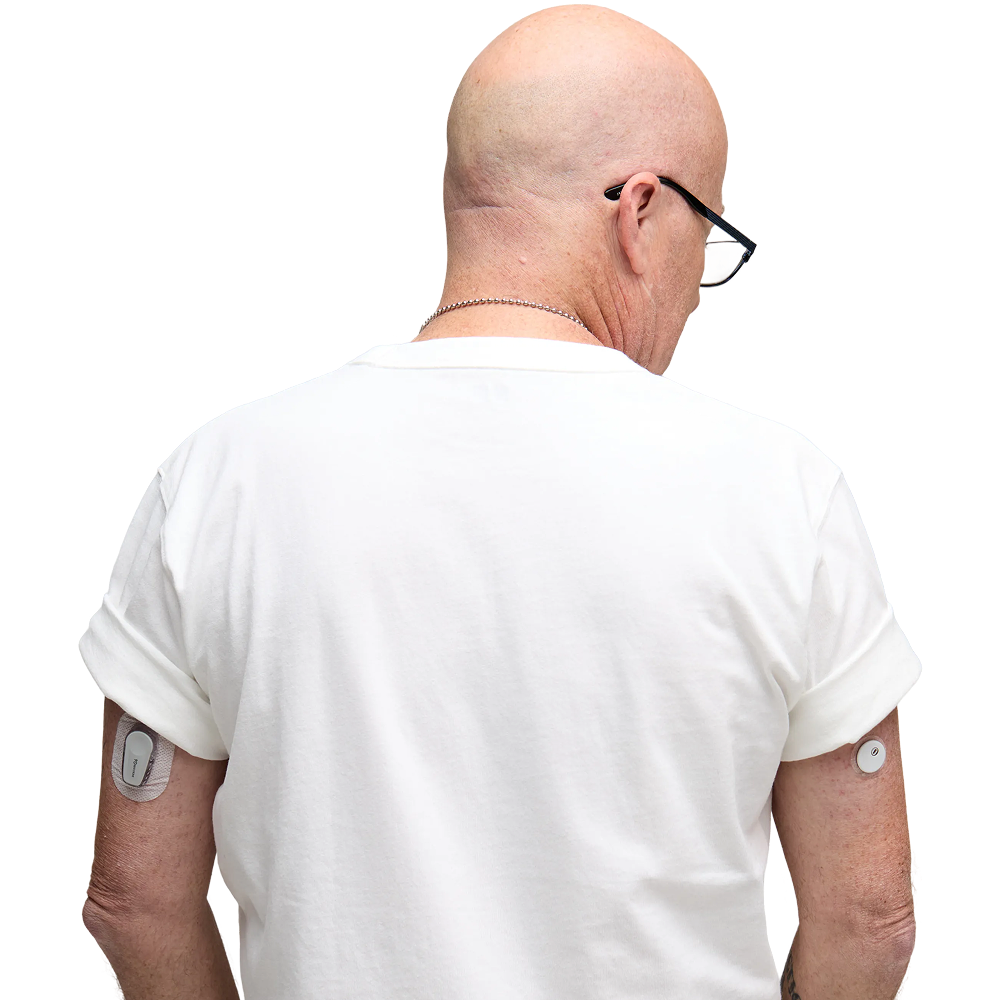
CGMs are an important tool that work alongside insulin pumps to help inform the pump what actions to take. Continuous glucose monitors like Dexcom's G6 and G7, Abbott's FreeStyle Libre 3 Plus, and Medtronic's Guardian 4 help to reduce the burden of diabetes management by providing real-time information about how things like foods, exercise and stress affect blood sugars without having to poke your fingers all day to get a reading.
The sensors have a flexible filament that sits just below the surface of the skin and measures blood sugars every 1 to 5 minutes. CGMs use a transmitter that sends blood sugar readings to a smartphone or insulin pump using Bluetooth.
Insulin pumps work by delivering insulin to the body on a frequent basis through an infusion set attached to the skin, usually on the belly, lower back, thigh or back of arm.
With an insulin pump, long-acting insulin is no longer needed; instead the pump delivers frequent, small doses of fast-acting insulin in response to the individual's needs and activities.
When eating meals or snacks, the pump user enters a current blood sugar reading (not required with pumps that integrate with a CGM) and the amount of carbs being eaten. The pump then calculates the amount of insulin required based on settings programmed into the pump (basal rates, carb ratios, correction factor), and administers it automatically.
Infusion sets come in a variety of sizes and configurations that suit different body types, skin types and preferences. Depending which pump you use and what kind of infusion set you choose, the infusion sets and reservoirs or cartridges need to be changed every 2-3 days, with the exception of extended wear sites from certain brands that last 7 days.
DIY AID, commonly known as looping, refers to open-source, user-built systems that automate insulin delivery by integrating insulin pumps, CGMs, and custom algorithms. Unlike commercial AID systems, DIY AID solutions are not officially approved by regulatory bodies but are developed and maintained by communities of people with diabetes. Popular platforms include Loop (iOS), AndroidAPS, and OpenAPS.
In 2023, Diabetes Canada released a position statement acknowledging the growing use of DIY AID systems among Canadians with type 1 diabetes. The organization emphasizes that healthcare providers should support individuals in their choice of insulin delivery methods, including DIY AID systems, and provide guidance to optimize glycemic control and quality of life.
Insulin pumps can make life with diabetes easier, but they're not for everyone. Talking to your healthcare team may help you determine whether a pump is right for you.
You may want to consider using an insulin pump if you:
- Experience high variability in blood sugar readings
- Are unable to meet targets with multiple daily injections
- Experience delays in food absorption (gastroparesis)
- Want to adjust or pause insulin doses when exercising
- Have or have had severe reactions to low blood sugar
- Have diabetes and are planning a pregnancy
- Want to reduce number of daily injections
- Want to enjoy an increase in quality of life
Most endocrinologists in Canada are supported by a Diabetes Education Program (DEP). Diabetes educators working with DEPs can help people with diabetes determine eligibility for insulin pumps. Criteria generally includes being enrolled or eligible for provincial healthcare coverage, being diagnosed with type 1 diabetes, being under the care of a physician or nurse practitioner, and completing pre-pump information and education modules.
Coverage for an insulin pump varies depending on the province you reside in. Most provinces have a financial assistance program that covers some or all of the cost of using an insulin pump. Each program has different eligibility rules and requirements, but if you have type 1 diabetes there's a good chance you will qualify. Coverage requirements and amounts can change from time to time, so we encourage you to review the coverage and eligibility details directly on the official provincial website.
The Medtronic MiniMed 780G is an advanced hybrid closed-loop insulin pump available in Canada that automatically adjusts basal insulin and delivers correction boluses every five minutes, even for missed or underestimated meals. When paired with the Guardian 4 sensor, it operates without fingerstick calibrations and supports glucose targets as low as 5.5 mmol/L. It also features an extended infusion set option that lasts up to seven days.
Disclaimer: Prices are subject to change and pump prices are an estimated range only. For specific pump pricing please contact the manufacturer directly.
Pump: $1,200 to $8,000 depending on your current pump status and insurance. The pump can only be purchased directly from Medtronic.
Monthly supplies: $212 to $360 through Endor Health
Paired CGM: $385 to $400 per month
Omnipod 5 is the newest tubeless insulin pump available in Canada. The waterproof pod, worn for up to 3 days, can be placed directly on areas like the arms, legs, lower back, or stomach, giving users options for comfort and discretion. Without tubing to manage, it can feel less intrusive and easier to wear during daily activities like sleeping, exercising, or getting dressed.
The system adjusts insulin automatically based on glucose readings from either the Dexcom G6 or the Dexcom G7. The pod and Dexcom sensor communicate directly with each other so that automated insulin delivery is not disrupted if the handheld controller is out of range.
Note: Prices are subject to change.
Handheld controller: $6,300 depending on whether you're currently on a pump or not. The controller can only be purchased from Insulet Canada directly.
Disposable supplies: Ontario Residents: $334/box of 10 pods (per month based on a pod change every 3 days); Rest of Canada: $360/box of 10 pods
Dexcom sensors: approximately $262 per month through Endor Health
The Omnipod DASH is a tubeless, waterproof insulin pump system available in Canada, offering up to 72 hours of continuous insulin delivery through a discreet, wearable Pod. Controlled wirelessly via a touchscreen Personal Diabetes Manager (PDM), it simplifies diabetes management with customizable basal and bolus settings, eliminating the need for daily injections and tubing.
However, it's important to note that the Omnipod DASH does not feature automated insulin delivery; it requires users to manually adjust insulin doses based on their glucose readings. For those seeking automated insulin delivery, the Omnipod 5 system offers this functionality and has been approved by Health Canada.
Note: Prices are subject to change.
PDM (handheld controller): $650 to $6,300 depending on whether you're currently on a pump or not.
Disposable supplies: $290 to $300/box of 10 pods (per month based on a pod change every 3 days)
The Tandem t:slim X2 is a sleek, touchscreen insulin pump available in Canada that combines advanced technology with a user-friendly design. Powered by Control-IQ technology, it integrates with the Dexcom G6 and G7 to predict glucose levels 30 minutes ahead and automatically adjust insulin delivery, including administering correction boluses when necessary. Users can bolus from their smartphone using the t:connect mobile app, and the pump supports remote software updates.
Note: Prices are subject to change.
Pump: approximately $1,000 to $6,300 depending on whether you're currently on a pump or not.
Disposable supplies: $220 to $250 per month through Endor Health
Dexcom sensors: approximately $260 to $299 per month through Endor Health
The mylife Loop system, combining the Ypsomed YpsoPump with the CamAPS FX app, offers an advanced automated insulin delivery solution for Canadians with type 1 diabetes. This hybrid closed-loop system integrates with Dexcom G6, adjusting insulin delivery every 8 to 12 minutes based on real-time glucose readings. The system includes a Companion remote monitoring feature, which allows caregivers to monitor glucose and insulin data remotely.
Note: Prices are subject to change.
Pump: $6,000 to $6,500 for new pump users
Disposable supplies: $235 to $290 per month through Endor Health
Dexcom sensors: $299 plus transmitter for Dexcom G6 through Endor Health