What is an infusion set?
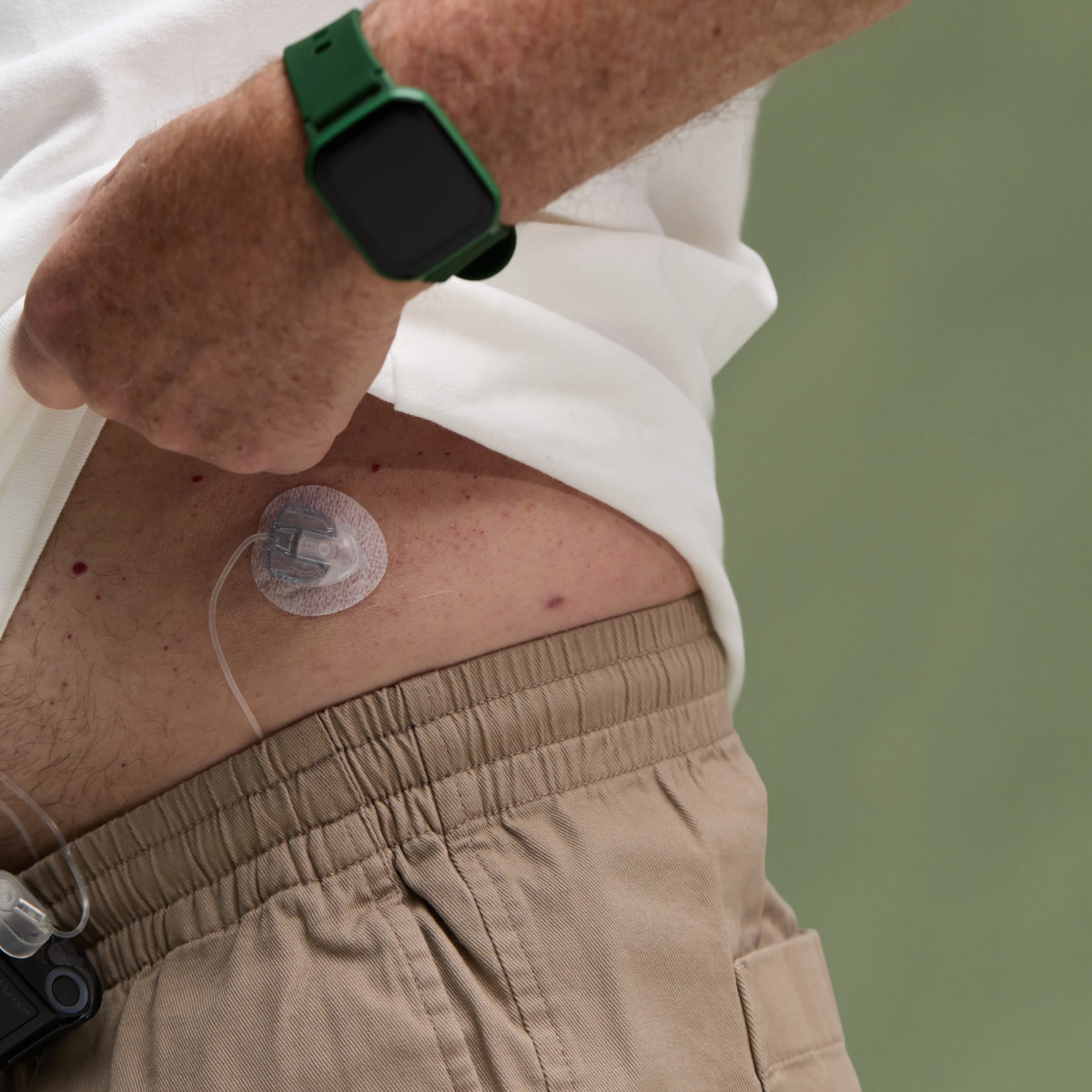
An infusion set is a small device that connects your insulin pump to your body. It delivers insulin from your pump into the fatty layer beneath your skin, giving your body a steady supply of insulin throughout the day and night. The main components of an infusion set are:
- Connector/Hub: Attaches to your insulin pump’s tubing or reservoir and creates a secure, leak-proof connection.
- Tubing: Thin, flexible plastic tube (typically 23-43 inches) that carries insulin from the pump to the insertion site.
- Insertion Needle: A sharp needle used only during insertion to place the cannula under your skin. It retracts or is removed afterward and is not left in your body.
- Cannula: A tiny, soft, flexible tube that stays under your skin and delivers insulin. Made of Teflon or steel, it comes in different lengths (typically 6–13 mm) and angles (90° or angled).
- Adhesive Patch: Sticks to your skin to hold the cannula securely in place for the 2–3 days the set is worn.
- Disconnect Feature: Found on some sets, this allows you to temporarily detach from your pump (for showering, swimming, etc.) without removing the entire set.
Most infusion sets are replaced every 2-3 days, although some extended-wear options are approved tore main in place longer.
Common types of infusion sets
Straight (90°) soft cannula
Placed perpendicular to the skin. The most commonly used type, suitable for many body types, and generally easy to insert, especially with inserter devices.
Angled soft cannula
Inserted at an angle (typically 20-45°), which may be helpful if you are lean or active. Can be more comfortable in certain areas compared to straight sets.
Steel needle
Uses a very thin metal needle rather than a soft plastic cannula. Some people prefer steel sets if soft cannulas bend or kink easily, or if they have a sensitivity to Teflon.
Typical wear times
- Standard infusion sets: About 2–3 days before changing.
- Extended-wear sets: Certain approved designs (such as the Medtronic Extended Infusion Set) can be worn for up to 7 days. These aim to reduce the frequency of changes and help preservepreferred site areas.
- Steel needle sets: Typically changed every 1–2 days.
Infusion sets by pump brand
Below you’ll find infusion sets grouped by compatible pump system. This makes it easy to compare the options available for your specific pump.
Medtronic MiniMed 780G pump
Tandem t:slim X2 pump
mylife YpsoPump
Selecting your cannula or needle length
The right length depends on your body type and the amount of subcutaneous (fatty) tissue at your insertion site. A simple pinch test can help guide your choice:
- Shorter (5.5–6 mm): Best for most people, especially those who are physically active or have less subcutaneous fat (pinch test < 1 cm).
- Longer (9 mm+): Recommended if shorter sets tend to pull out or if you have more subcutaneous tissue (pinch test > 2 cm).
- Angled sets (13–17 mm): The longer cannula sits at an angle under the skin, so effective depthis shallower than the stated length. Often preferred by lean or active individuals.
Choosing a set that fits your lifestyle
- Daily activity level: If you’re very active, look for sets that stay secure during movement.
- Skin sensitivity: Some people need sets with gentler adhesives or may benefit from skin-prep products.
- Comfort with insertion: Soft cannula sets with all-in-one inserters tend to be easier for many people. Steel needle sets require manual insertion but eliminate cannula kinking.
Insertion and site care
Preparing your site
- Pick a clean, dry area with minimal motion (avoid areas where skin folds or rubs).
- Common sites include the abdomen, upper buttocks, outer thighs, and back of the arms.
- Ensure skin is thoroughly cleaned and
- completely dry before application.
- Rotate sites regularly to help prevent irritation or scar tissue buildup
Enhancing adhesion
If your set isn’t staying put, consider these skin-prep products:
- Skin barriers: Cavilon, Skin Tac, or Adapt.
- Extra tapes: Tegaderm, Hypafix, or GrifGrips.
- Removal aids: Tac Away or Uni-Solve to gently remove adhesive residue.
Removing and replacing a set
- Wash your hands and gather all needed supplies.
- Remove the old set gently and dispose of it safely in a sharps container.
- Choose a fresh site and insert the new set following the manufacturer’s procedure.
- Prime the cannula to ensure insulin is flowing correctly before securing it.
Warning signs and when to get help
Even with good site care, infusion site problems can occur. Knowing what to watch for helps you act quickly and avoid disruptions to your insulin delivery.
Signs of infusion site problems
- Redness, swelling, or warmth around the insertion site
- Pain or tenderness that doesn’t resolve shortly after insertion
- Unexplained high blood sugar. This can indicate a kinked or dislodged cannula, an occlusion, or insulin that isn’t absorbing properly
- Leaking insulin or blood
- Hard lumps or scarring (lipohypertrophy) at frequently used sites
- Occlusion alarms from your pump
When to contact your healthcare provider: If you notice signs of infection (increasing redness, pus, or fever), persistent unexplained high blood sugar that doesn’t improve after a site change and correction dose, or repeated site failures, contact your diabetes care team promptly. If you experience symptoms of diabetic ketoacidosis (DKA) such as nausea, vomiting, abdominal pain, or fruity breath, seek medical attention immediately.
What to do if your set fails mid-day
If you suspect a site problem between planned changes:
- Check your blood sugar with a finger-prick to confirm your CGM reading.
- Give a correction dose via injection (pen or syringe) if blood sugar is very high.
- Change to a new infusion set at a fresh site.
- Monitor closely over the next few hours to confirm blood sugar is trending down.
Tip: Always keep a backup injection method (insulin pen or syringe) and extra infusion sets on hand, especially when away from home.
Travel and storage tips
A little planning goes a long way when travelling with your insulin pump and infusion supplies.
Packing and storage
Store infusion sets in a cool, dry place. Avoid leaving them in direct sunlight, in a hot car, or near a heat source. Insulin and infusion sets should be kept within the temperature range specified by their manufacturers. When flying, pack pump supplies in your carry-on. Checked luggage can be exposed to extreme temperatures.
Airport security
Insulin pumps can safely pass through walk-through metal detectors. However, most pump manufacturers recommend that pumps should not go through X-ray machines or full-body scanners, as these may affect device functioning. Inform the screening officer before screening begins that you are wearing an insulin pump, and request a physical search (pat-down) as an alternative. In Canada, CATSA permits all diabetes supplies including insulin, syringes, and pump equipment in carry-on luggage. Insulin is exempt from the 100 mL liquid restriction. A doctor's letter is not required but may help smooth the process.
Time zone changes
When crossing time zones, consult with your diabetes care team about adjusting your pump’s clock and basal rate schedule. Changing the time on your pump shifts when each basal rate begins, which could affect your blood sugar.
Tip: Pack more infusion sets and insulin than you think you’ll need. A good rule of thumb is to bring at least double the supplies for your trip length.
Need help with supplies or questions?
Endor Health makes it simple to get the infusion sets and pump supplies you need, with fast delivery and comprehensive support across Canada.
- Order infusion sets and pump supplies with direct insurance billing through provincial health programs and private plans.
- Get expert help from certified diabetes care providers who can help you find the right infusion set.
- Fast, free delivery across Canada keeps your supplies on time, every time.
The information in this article is for educational purposes only and should not replace advice from your healthcare provider. Always consult with your diabetes care team before making changes to your diabetes management.



.svg)
.svg)
