
.svg)
Guide Highlights
Whether you're living with diabetes, have prediabetes, or simply want deeper insights into your health, CGMs (Continuous Glucose Monitors) are transforming how Canadians track and understand their glucose levels. This guide will help you understand how CGMs work, who they're for, and how to choose the right one.
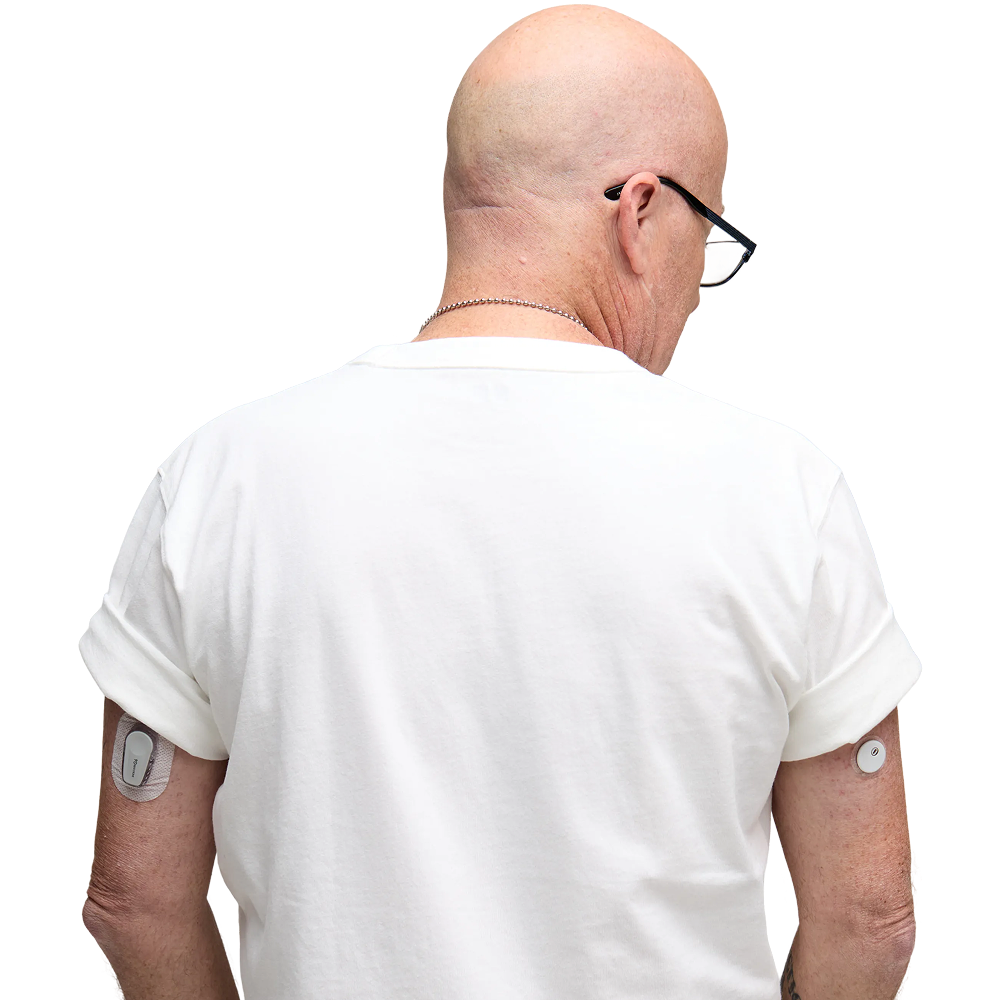
A CGM is a small wearable device that continuously tracks your glucose (sugar) levels throughout the day and night. Instead of finger pricks, CGMs use a tiny waterproof sensor with a filament placed just under the skin to measure glucose in the interstitial fluid. The sensor transmits data to your phone or reader, giving you real-time insights, trends, and alerts.
CGMs are used by:
- People with Type 1 or Type 2 Diabetes
- Those with prediabetes
- People interested in optimizing their health
- Athletes or individuals tracking nutrition and recovery
- People with hypoglycemia or those prone to hypoglycemic symptoms
CGMs consist of a sensor inserted under the skin to measure glucose, and an app or reader that displays your glucose readings and trends. Clinical studies continue to show CGMs improve glycemic control, reduce time spent in hypo/hyperglycemia, and increase confidence and engagement in self-management.
Wearing a CGM can help you:
- Catch highs and lows before they happen
- See how your body reacts to food, exercise, and stress
- Reduce the need for fingersticks
- Improve HbA1c and time-in-range
- Make smarter choices day to day
- Sensor wear time: 14 days
- Alerts: Optional low/high glucose alarms
- Warm-up time: 60 minutes
- Approved ages: 4 years and older
- Approved sites: Back of upper arm
- Cost at Endor Health: $102 per sensor
- Sensor wear time: 15 days
- Alerts: Customizable low/high glucose alarms
- Warm-up time: 60 minutes
- Approved ages: 2 years and older
- Approved sites: Back of upper arm
- Cost at Endor Health: $114.76 per sensor
The FreeStyle Libre 3 Plus is the smallest CGM sensor available.
- Sensor wear time: 10.5 days
- Alerts: Customizable alerts, including predictive low alerts
- Warm-up time: 30 minutes
- Approved ages: 2 years and older
- Approved sites: Back of upper arm, abdomen (not in pregnancy), upper buttocks (ages 2-6 only)
- Cost at Endor Health: $87 per sensor (20% off with prescription)
- Sensor wear time: 10 days
- Alerts: Customizable alerts, including predictive low alerts
- Warm-up time: 2 hours
- Approved ages: 2 years and older
- Approved sites: Abdomen (ages 2+), upper buttocks (ages 2-17), back of upper arm (18+)
- Note: Requires a separate transmitter (unlike the G7, which has an all-in-one design) which lasts up to 3 months
- Cost at Endor Health: Transmitter $39.99 plus sensors $299 (3 pack)
- Sensor wear time: 7 days
- Alerts: Advanced alerts when used with compatible pump (including predictive alerts)
- Warm-up time: 2 hours
- Approved ages: 7 years and older
- Approved sites: Back of upper arm
- Cost at Endor Health: $390 for a pack of 5 sensors
The Medtronic Guardian 4 is for use only with a Medtronic Insulin Pump.
Accuracy is measured using MARD (Mean Absolute Relative Difference). A lower MARD means the CGM is more accurate. For example, a MARD of 9% means the CGM readings are, on average, within 9% of lab-tested values.
Accurate readings are important for everyone using a CGM, but especially for people who take insulin. If your CGM reading is off, it could lead to taking too much or too little insulin, which can cause low or high blood sugars.
All CGMs available in Canada allow you to share your glucose data with healthcare providers and loved ones through connected apps and cloud-based platforms. Sharing your data allows your healthcare providers to review your glucose trends and make more informed decisions about your treatment.
CGM costs can vary by sensor and province, but many are covered by private insurance or provincial programs. A prescription is needed to bill a provincial or private payer for CGM sensors.